
Signs of a Gambling Problem: How to Tell When It's More Than a Hobby
A gambling problem shows itself through a recognizable set of warning signs: gambling more than you can afford, chasing losses to win back money, being preoccupied with gambling, needing to bet larger amounts to feel the same excitement, failing to cut back despite wanting to, hiding the extent of it, and continuing even as it harms your finances, relationships, or wellbeing. When several of these appear together, gambling has likely crossed the line from a hobby into a disorder. The good news is that these signs are identifiable early, and recognizing them — in yourself or someone you love — is the first and most important step toward getting help. This guide explains what each warning sign looks like in real life, so you can tell the difference between harmless entertainment and a problem that needs attention.
Where the line actually is
Before listing the signs, it helps to understand what separates safe gambling from a problem, because the activity itself is not the issue — the relationship to it is. For most people, occasional gambling is a form of entertainment: money set aside for fun, spent within limits, walked away from without distress. It stops being harmless when it starts causing harm and the person keeps going anyway. That single pattern — continuing despite negative consequences — is the core of every addiction, and it is the clearest sign that gambling has become something more than a pastime.
This matters because people often judge a gambling problem by how much money is involved, when the real measure is control and consequence. Someone can lose small amounts and still have a serious problem if they cannot stop, hide it, and let it damage their life; someone else can wager larger sums responsibly, within limits they respect. The question is never simply "how much?" but "is it in control, and is it causing harm?" Keeping that distinction in mind makes the warning signs below far easier to read honestly, because it focuses attention on the pattern of behavior rather than on a dollar figure.
Sign 1: Chasing losses
The most telling sign of a gambling problem is chasing losses — the urge, after losing money, to keep gambling in an attempt to win it back. It feels logical in the moment: you're down, so continuing seems like the way to recover. In reality, chasing is the mechanism that turns a manageable loss into a ruinous one, because the attempt to win back losses almost always deepens them. When losing becomes a reason to gamble more rather than a reason to stop, the activity has entered dangerous territory.
Chasing is so significant because it converts loss itself into a trigger, trapping the person in a self-reinforcing cycle. Each loss produces the urge to recover it; each failed recovery produces a bigger loss and a stronger urge. From inside, it feels like a strategy; from outside, it is the clearest early warning that gambling is becoming compulsive. If you notice that you — or someone close to you — cannot walk away from losses and keep betting to "get even," treat it as a serious signal, not a temporary run of bad luck. This is one of the moments where recreational gambling most often tips into a genuine problem, as we explained in more depth in how gambling addiction works and why it's a disorder, not a weakness.
Sign 2: Preoccupation and escalation
A second cluster of warning signs concerns how much space gambling takes up in a person's mind and how much it takes to satisfy them. Preoccupation means gambling increasingly occupies your thoughts — planning the next session, reliving past ones, thinking about it when you should be focused on other things. When gambling moves from something you do occasionally to something that is often on your mind, that growing mental grip is an important early sign that the balance has shifted.
Alongside preoccupation comes escalation, which closely parallels tolerance in substance addiction. Over time, a person with a developing problem needs to gamble with larger amounts of money to feel the same level of excitement, because the previous stakes no longer produce the same thrill. This creeping need for more is dangerous precisely because it is gradual — each increase feels small, but the trend points steadily toward greater risk and greater harm. If the amount required to feel the same buzz keeps climbing, or if gambling is crowding out other interests and occupying more and more of your attention, these are signals worth taking seriously before the escalation goes further.
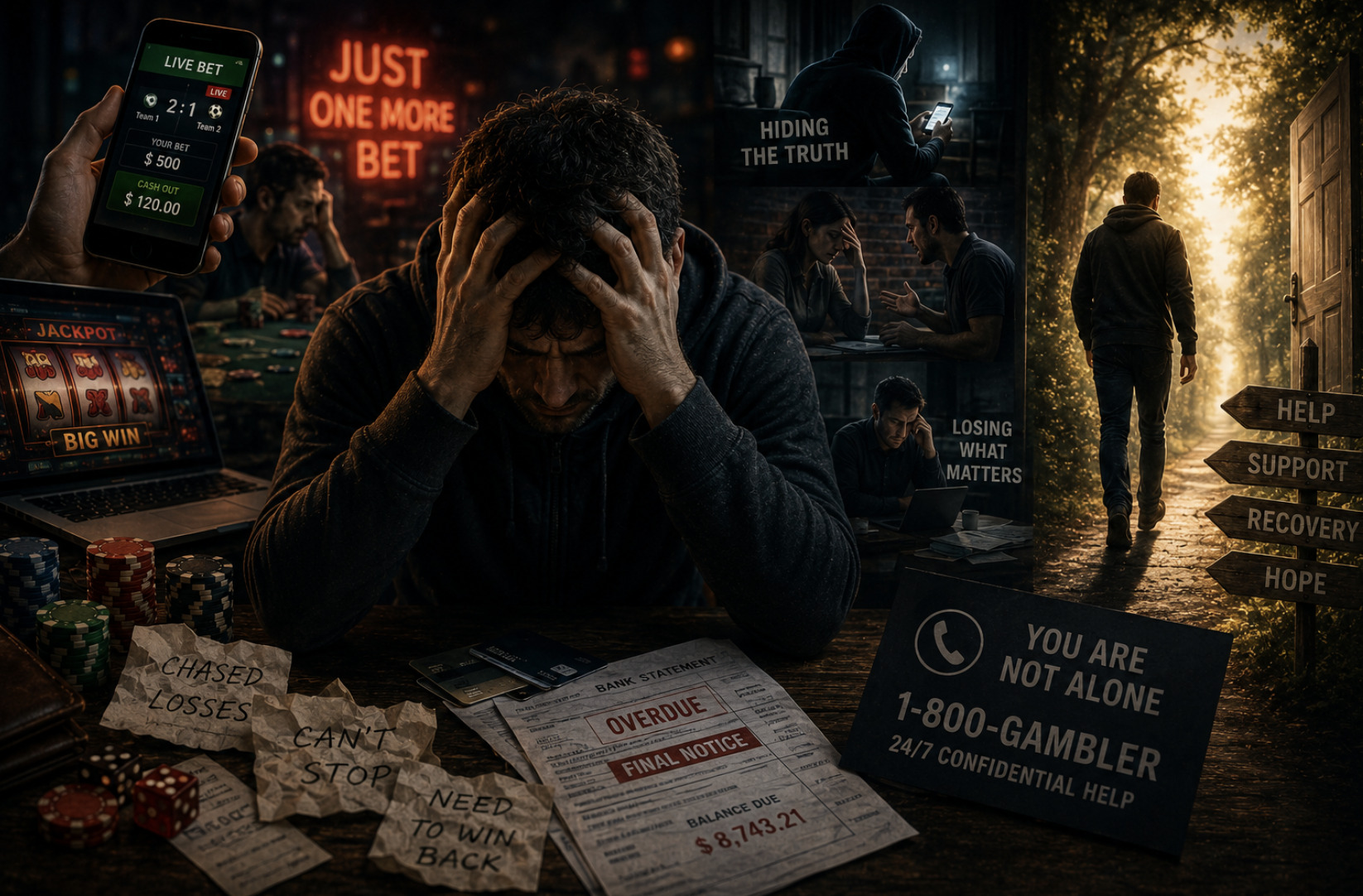
Sign 3: Failing to stop, and restlessness when you try
One of the defining features of any addiction is the inability to cut back despite genuinely wanting to, and gambling is no exception. A person with a problem often recognizes that they should gamble less, resolves to do so, and finds they cannot follow through — repeatedly. The gap between the sincere desire to stop and the inability to actually stop is one of the strongest indicators that gambling has become a disorder rather than a choice. It is not that they don't want to quit; it's that wanting is no longer enough.
This sign often comes with another: restlessness or irritability when trying to cut down or stop. Just as with other addictions, reducing the behavior can produce genuine discomfort — agitation, tension, a difficult mood — which then pushes the person back toward gambling for relief. If attempts to stop are repeatedly unsuccessful, or if trying to cut back makes someone noticeably restless and irritable, these are meaningful signs. They show that the behavior is no longer under simple voluntary control, which is exactly what distinguishes an addiction from a habit. Recognizing this pattern is important because it reframes the situation honestly: the person isn't failing to try hard enough — they're up against a genuine disorder that willpower alone rarely overcomes.
Sign 4: Hiding it, and harm that keeps coming
The final and often most revealing signs are concealment and continued harm. People with a gambling problem frequently hide the extent of it — lying about how much time or money is involved, keeping it secret from family and friends, minimizing it when asked. This secrecy is itself a warning sign, because the need to hide behavior usually means some part of the person already knows it has become a problem. Honest, controlled gambling has nothing to conceal; hidden gambling almost always signals that something is wrong.
The most serious sign of all is harm that continues despite the damage. When gambling begins to hurt the things that matter — finances stretched or ruined, relationships strained, work suffering, health and mood declining — and the person keeps gambling anyway, the line into disorder has clearly been crossed. Continuing in the face of mounting negative consequences is the single clearest marker of addiction. If gambling is causing real damage and yet the behavior does not stop, that alone is reason enough to seek help, regardless of how many other signs are present. Harm that persists despite everything is not a sign to wait and see — it is a sign to act.
What to do if you recognize these signs
If several of these warning signs are present in your own life or in someone you care about, the most important thing to understand is that this is a recognized, treatable condition — not a moral failing — and that help is genuinely available. Noticing the signs is not a cause for shame; it is the beginning of doing something about a problem while it can still be addressed. The signs tend to worsen when ignored, so recognizing them early is a real advantage, not a reason for despair.
The practical next step is to reach out — to a trusted person and to one of the support services that exist specifically for gambling problems. Many places offer confidential helplines available around the clock; in the United States, for example, the National Problem Gambling Helpline can be reached at 1-800-GAMBLER, and similar services exist in many other countries. If you are worried about someone else, approaching them with concern rather than judgment — from the understanding that this is a health condition — makes it far more likely they will be able to hear you. The warning signs of a gambling problem are clear enough to catch early, and catching them early, followed by reaching out for help, is how recovery reliably begins.
Frequently asked questions
How do I know if I have a gambling problem or just a hobby?
The difference is control and consequence, not the amount of money. If you gamble within limits, walk away easily, and it causes no harm, it's a hobby. If you chase losses, can't cut back despite wanting to, hide it, or keep going as it damages your life, it has become a problem — even if the sums are small.
Is chasing losses really that serious?
Yes. Chasing losses — gambling more to win back money you've lost — is one of the clearest signs of a developing problem, because it turns loss itself into a reason to keep going and almost always deepens the damage. It's often the moment recreational gambling tips into a compulsive cycle.
Can you have a gambling problem without losing large amounts of money?
Yes. A gambling problem is defined by loss of control and by harm to your life, relationships, and wellbeing — not by a specific dollar figure. Someone can lose relatively little and still have a serious problem if they can't stop, hide it, and let it cause damage.
What should I do if I recognize these signs in myself?
Treat it as a health issue, not a weakness, and reach out for help. Talk to someone you trust and contact a dedicated support service or confidential helpline, such as 1-800-GAMBLER in the United States. Recognizing the signs early and seeking support is how recovery begins.